




Yes it was developed for NASA.Originally Posted by struth

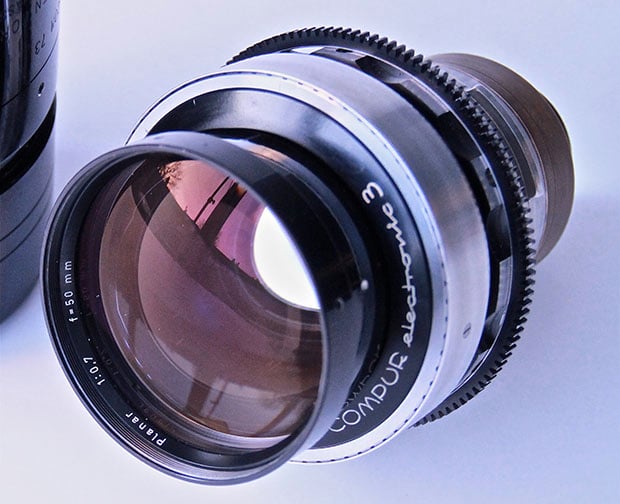
In the 1960s, NASA commissioned Carl Zeiss to develop a set of extremely large aperture lenses to capture images of the dark side of the moon in its Apollo missions. The company ended up creating 10 Carl Zeiss f/0.7 lenses. Six were sold to NASA, one was kept by Carl Zeiss, and three of them were sold to filmmaker Stanley Kubrick.
However, it is not the fastest lens ever made. That distinction again goes to Zeiss, but for an entirely different reason.
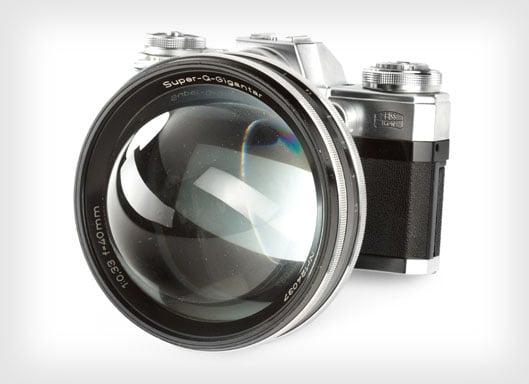
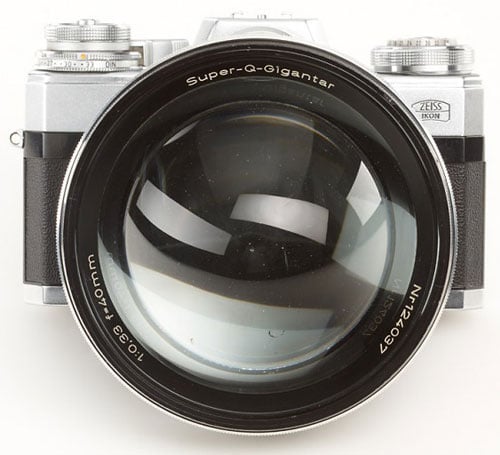
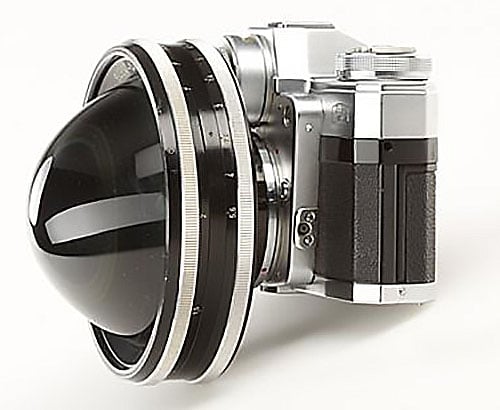
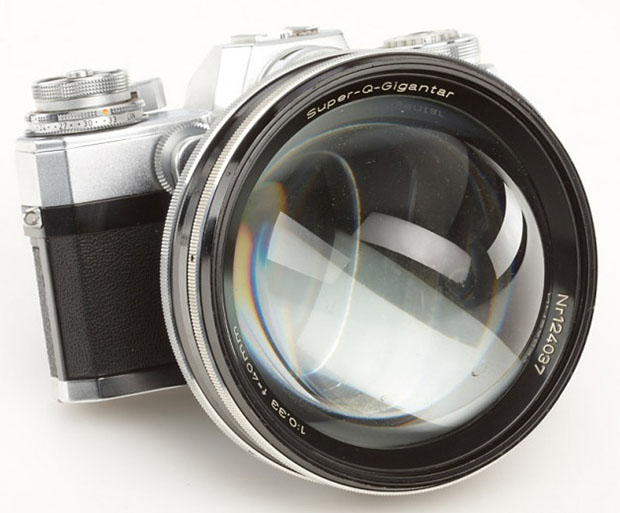
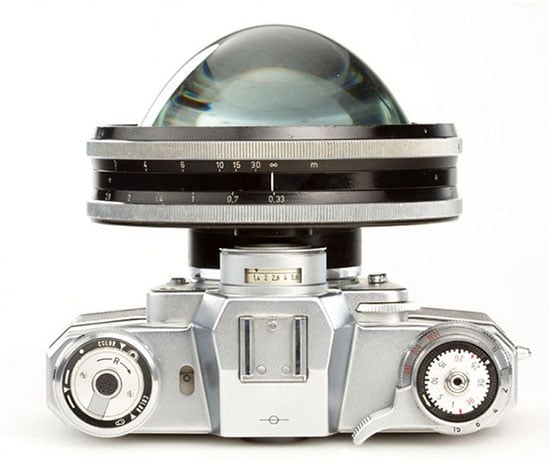
It is the Carl Zeiss Super-Q-Gigantar 40mm f/0.33. It’s what some have called "the fastest camera lens ever made".
Is that claim true? Well, yes and no… but mostly no.
Do a bit of research on the web, however, and you won’t find any sample photographs captured with this lens. Why? Because the lens was never designed for real world use, and was never functional.
In the auction description of this lens, the auctioneers WestLicht stated that the 1960s lens was a “unique lens made by Carl Zeiss for Public Relation purposes […] for the Zeiss Contarex 'Bullseye' camera”.
The lens was born in the 1960s during a time in which camera companies were aiming for larger and larger apertures, just as companies these days are gunning for more and more megapixels. Canon had just released its 50mm f/0.95, and photographers became fixated on the speed of lenses on paper rather than their performance in real world situations.
Zeiss Ikon public relations guru Herr Wolf Wehran decided that he wanted to draw attention to his phenomenon by creating a product poking fun at the fast glass fad.
Prior to Photokina in 1966, Wehran visited a buddy of his in the Zeiss lens design department. The two found an old condenser lens sitting around, and used it to create a Contarex-mount “frankenlens” using various found pieces. Along the way, they arbitrarily decided that their lens would have a focal length of 40mm and a maximum aperture of f/0.33.
The lens was given the name “Super-Q-Gigantar.” The “Q” stands for “Quatsch,” which translates to “nonsense” in German. And that’s how the “fastest lens ever made” came to be.
(Apologies for the massive (or should that be 'Gigantic'?) thread drift, but I thought it might be of some interest.)



 .... ؠ ......